When travelling on long routes, the situation may not remain stable; running out of fuel can bring any operation to a standstill. Whether you’re working, driving across the city, operating at a construction site, or moving heavy machinery, losing fuel is common. No fuel means less productivity, missed deadlines, and, in some cases, a significant increase in operational costs.
Even for professional drivers, the situation might turn out to be stressful, risky, and completely avoidable in some cases.
This blog will guide the readers to what really happens when you run out of fuel in the middle of nowhere. Further, it will discuss what to do immediately in such emergencies, what hidden dangers are involved, and how to choose the right emergency fuel provider.
This will potentially guide the reader to take smart steps and adopt preventive habits to make sure you never get stranded on the road again. Sometimes the reasons may include waiting for a cheaper fuel day, misreading the fuel gauge or not going for refuelling because of a busy schedule.
What do I do if I run out of fuel while driving?
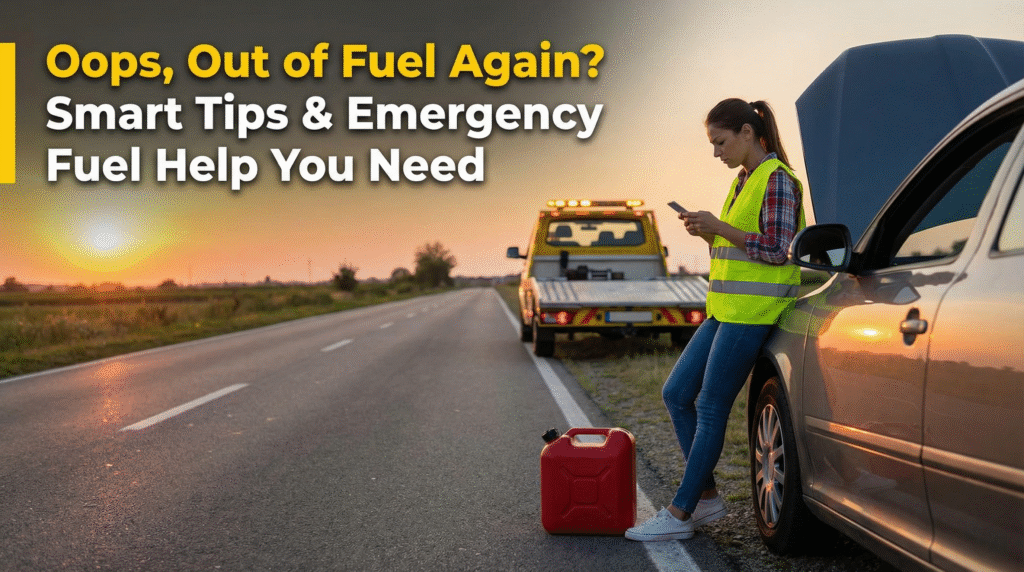
Now that you are stuck on the road with no fuel, the following steps will help turn the stressful situation into a calmer one.
Follow the simple steps to stay calm, slow down, and pull off to the side of the road or the emergency lane:
- Turn on your hazard lights as soon as possible in this process to warn other road users.
- Turn the engine off once you’re safely pulled over.
- If the fuel station is nearby, it’s easier for you to walk there and buy some fuel.
- Or to phone a friend, a relative or roadside assistance.
Safety is vital, so be careful to keep yourself and your car off the road as much as possible. Consider sitting in your car if you’re waiting for someone to arrive.
What happens to your car when you run out of fuel?
It’s always necessary and important to check your car for fuel before getting on the road. When it happens on a busy road or highway, you might end up blocking traffic.
When the fuel tank is left empty for a long period, the engine will start to draw in air along with the last drops of fuel, preventing the engine from starting again. For such reasons, never leave your car totally dry. It’s better to find a nearby fuel station or have a spare fuel in the boot to avoid any disappointments in the middle of the road.
There are several reasons to tell when your car doesn’t have enough fuel, and it’s time to head to a petrol station fast. Your car does not always stop, but shows signs of fuel starvation in the car.
Also read: What to Do After Your Car Is Towed: Your Complete Post-Towing Checklist
No fuel-Low Car Performance
You may notice a drop in the car’s performance, or intermittent power surges, engine backfiring or sputtering.
If the tank remains empty for a longer period, the hydraulic power in your brakes or steering wheel will also begin to die.
As your car runs out of fuel, there should be several tell-tale signs that it’s time to head to a petrol station to fill up. This might not stop the car suddenly, but these functions will certainly require more effort to control
However, cars with electric power steering shouldn’t have this issue since the power from your battery will ensure your steering continues functioning as normal.
Inefficiency of Fuel-Delivery System
Most electric cars have a built-in electric fuel pump that is present in the fuel tank. The fuel pump helps the tank cool and lubricate itself, but when there is enough fuel, it becomes more difficult to automatically lubricate the tank. This may cause havoc to your car’s fuel delivery system.
Frequent emptying of the fuel tank may overheat the engine. Also, the fuel pump, if it fails due to low fuel levels, will turn into an expensive fix.
How to Choose the Right Fuel Provider?
It’s not always convenient to find a reasonable fuel delivery service once you break down on the road. Take time to search for a reliable provider that can save your time, money and stress. It’s best to have some of the nearby trustworthy emergency fuel providers’ contact information handy.
Doing a little research before travelling to a specific place, and by identifying a go-to provider in your area or anywhere ahead of time, is the key. By saving their number and information turns a potential risk into a minor inconvenience.
Here are the key things to consider when finding the right fuel provider:
- Look for companies with proven track records and reviews to handle urgent requests professionally. The person who understands the urgency will value the time and bring the right equipment for assistance.
- Safety and Security Standards: The Company must adhere to the rules and regulations to protect you, your car and the driver. A professional company will be transparent and clear in dealing with the situation.
- Ask the provider questions like what the emergency response time is. Are there services transparent in pricing and the delivery process? Do they operate 24/7? A company that provides a clear ETA is the most reliable.
- Track your location and find the most reliable providers in the areas where you travel most for business or work. Most companies provide a map, apps or a Zip code checker on their website.
- Calculate all the payments accurately and see what kind of payment options are present. Whether the provider is transparent in their dealings or will ask for extra payments later. Also, look for all options, like mobile payment options, for added convenience.
Also read: Emergency Vs Scheduled Towing: What Do You Need and When?
Pre-Checking Tips
When your car is running out of fuel, the dashboard gauge provides a general indication. The readings might fluctuate, especially on the sloped roads. For practical purposes:
Trust the warnings: Before completely drying out, the car will show warning signs for low fuel, illuminating the warning light when there is about 10-15 per cent fuel left in the tank. Use this as a final warning and take precautions to refuel in a timely manner.
- Use the Quarter-Tank Rule: A good and sound preventive tip is to refuel your car as the tank reaches a quarter full. This provides a safe buffer, especially in remote areas or places with unexpected heavy traffic.
- Track Mileage: Note your car’s miles per gallon (MPG) in case you suspect inaccuracy in the gauge. Reset your trip odometer after each fill-up to estimate your remaining range.
- Regular Maintenance: The most important tip and trick is the timely maintenance, including clean filters, the right oil, and properly inflated tyres. This will provide more consistent and efficient fuel consumption, making your estimates more reliable.
With Cheap Tow, ‘running out of fuel’ is avoidable
With reliable services like Cheap Tow, you won’t be left stranded on the road for hours. Whether you’re driving a family car, operating machinery or logistics, or managing and transporting a large-scale fleet, running out of fuel is common yet frustrating. But with the right steps and choosing a reliable service, the situation doesn’t have to turn into a crisis. If you find yourself stuck on the road with no fuel, you can trust Cheap Tow’s team. Stay safe, plan and manage your journeys by finding reliable services like Cheap Tow.
Why Cheap Tow?
- Local Knowledge
- Dedicated service 24/7
- Affordable and transparent
- Modern fleet and trained staff
- Customer-centric mindset
Cheap Tow has a simple mission to make towing services affordable, accessible and stress-free for your car. As a trusted towing and roadside assistance across Melbourne and Victoria, Cheap Tow specializes in emergency towing, vehicle safety and ensures customers’ peace of mind. Cheap Tow’s professional 24-hour and 7-day-a-week assistance makes the difference in getting you and your vehicle back on the track.
Cheap Tow prioritizes customer satisfaction, affordability and safety by handling the situation with utmost care. A team of experienced professionals provide efficient and damage-free service every time. For more details and assistance, call us at: +61 470 320 481 or 24/7 Towing Helpline: 0470 320 481 serving Victoria and interstate.