
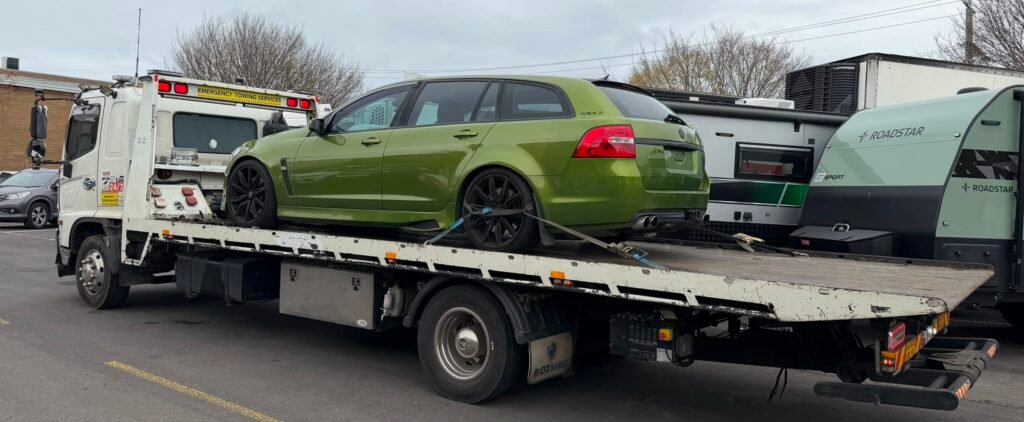
Car auctions move fast. A vehicle you win at 10am can be sold, paid for, and expected off the yard by the end of the day, and most auction houses in Melbourne charge daily storage fees if it is not collected on time. For buyers and dealers who are not physically driving the car away, that means pickup day comes down to one thing that rarely gets planned properly: how the vehicle actually gets from the auction yard to its next destination.
This guide covers what actually happens on auction pickup day, what paperwork you need to have sorted before the tow truck arrives, and the mistakes that cost buyers and dealers time and money at Melbourne auction houses.
Why Auction Car Towing Is Different From a Regular Tow
A standard tow call usually starts with a breakdown or a minor prang, and the driver is present to hand over keys, confirm the destination, and sign off on the job. Auction towing is a different logistics problem entirely.
Vehicles bought at auction are frequently non running, have flat batteries after sitting on a yard for weeks, or are being bought sight unseen by a buyer who is not physically at the auction house at all. Dealers often need several vehicles moved from the same yard on the same day, sometimes to different destinations. And because many auction vehicles are traded, wholesaled, or bought for parts, the vehicle’s condition on pickup day can range from a clean running car to something that will not start and needs to be winched onto a flatbed.
This is also where a common misunderstanding comes up with towing companies generally, so it is worth clearing up early: accident scene towing in Victoria is regulated separately from general towing work. Tow trucks responding to a crash on a public road are dispatched through Victoria’s formal Accident Towing Services Scheme, which allocates jobs to accredited operators rather than allowing any towing company to attend a crash scene directly. Auction towing sits outside that scheme entirely. It is a private commercial booking, like moving a car between two private addresses, which means you can book directly with any towing provider without waiting on an allocation system. If you want the detail on how the accident towing allocation process works, our guide on accident towing law in Victoria covers it in full.
What Actually Happens on Auction Pickup Day
Most Melbourne auction houses, including major players like Manheim and Pickles, run a similar general process once a vehicle is sold, though exact procedures vary by venue.
1. Payment and release authorization. The auction house will not release a vehicle until payment has cleared and the buyer has been issued a release document or vehicle collection docket. If you are using a towing company on your behalf, they typically need this document, or written authorization from you, before the yard will hand the vehicle over.
2. Yard check in. A tow truck arriving to collect an auction vehicle usually needs to check in at the auction house office, present the release paperwork, and confirm the vehicle’s lot number and location on site before loading.
3. Condition assessment and loading method. Running vehicles can usually be driven onto a flatbed or towed conventionally. Non running vehicles, vehicles with flat tyres, or anything auctioned “as is” for parts or repair typically needs a flatbed with a winch, since dragging a non rolling vehicle risks damaging wheels, brakes, or the drivetrain.
4. Transport to destination. This might be a dealer’s own yard, a mechanic for inspection, a private address, or in some cases interstate, depending on where the vehicle was purchased and where it is going.
5. Delivery and handover. For dealers moving multiple vehicles, this step often needs to be coordinated across several drop off points in a single day, which is where booking a towing provider that handles bulk auction transport becomes far more efficient than arranging separate one off tows.
Documents to Have Ready Before the Tow Truck Arrives
This is the step that catches out the most buyers, particularly first time private buyers who are used to driving a car away rather than arranging transport for it. According to Consumer Affairs Victoria’s guidance on selling a car, which also covers vehicles sold through auctions, sellers are required to provide specific documentation before a private transfer of registration can be completed.
Before pickup day, confirm you have:
The auction house release document or collection docket, proving the vehicle has been paid for and is authorized for release to you or your nominated towing provider.
A roadworthy certificate, if the vehicle is being registered rather than transported for parts, repair, or wrecking. Victoria’s transport authority confirms a roadworthy certificate is valid for 30 days from issue and is required before registration can be transferred into your name, unless the vehicle is exempt.
Your driver licence or VicRoads customer number, needed to complete the registration transfer once the vehicle is in your possession.
Written authorization for the towing company, particularly if you are not attending the auction yourself. Most auction houses will not release a vehicle to a third party towing provider without documented proof they are acting on your behalf.
If the vehicle does not have a current roadworthy certificate and you plan to drive it rather than tow it, it generally cannot legally be driven on public roads in Victoria, which is one of the most common reasons buyers end up needing a tow they had not budgeted for.
Common Mistakes Buyers and Dealers Make on Pickup Day
Assuming the vehicle will start. Auction vehicles often sit for extended periods before sale. A flat battery, seized brakes from sitting, or a vehicle sold explicitly as non running are all common, and none of them can be handled with a standard tow rope or a driver simply hopping in and starting the engine.
Booking a standard tow instead of a flatbed for non running vehicles. Wheel lift towing works for running vehicles but can cause damage to a car that will not roll freely, particularly anything with a seized component or a locked transmission.
Not confirming storage cut off times. Most auction houses charge daily storage fees once a grace period passes, and those fees can add up quickly if pickup is delayed by even a day or two while sorting a tow truck.
Leaving interstate transport until the last minute. If a vehicle bought at a Melbourne auction needs to go interstate, that is a longer job with more planning required than a local tow, and last minute bookings are harder to schedule around auction storage deadlines.
Not confirming who is authorized to collect. Auction houses generally need documented proof of who is collecting on the buyer’s behalf, and a towing company turning up without it can be turned away, costing an extra day of storage fees.
Interstate Auction Vehicle Transport
Melbourne is one of the country’s larger auction hubs, and it is common for dealers and private buyers from other states to purchase vehicles here sight unseen and have them transported home. Interstate auction transport involves a few extra considerations beyond a local tow:
Longer lead times for scheduling, since interstate transport is typically planned as a route rather than an on demand job.
Confirmation of whether the vehicle will be re registered in the destination state, which may require its own inspection or roadworthy process separate from Victoria’s requirements.
Higher value protection for the trip, particularly for prestige, classic, or high value vehicles being moved long distances.
If you are coordinating an interstate purchase, it is worth booking transport as soon as payment clears rather than waiting until the vehicle needs to leave the yard, since interstate routes are harder to slot in at short notice than a local Melbourne tow.
Bulk and Dealer Auction Transport
For dealers buying multiple vehicles at the same auction, or across several auction houses in a single week, coordinating transport one vehicle at a time is inefficient. A towing provider that offers bulk auction transport can typically plan a single route covering several pickups and drop offs, which reduces both cost per vehicle and the coordination overhead of managing multiple separate bookings. This matters most during high volume periods, such as end of financial year clearance auctions, when yard storage fees and turnaround pressure are both higher than usual.
Luxury, Classic, and Non Running Vehicles
High value and classic vehicles bought at auction need handling that goes beyond a standard flatbed job. Soft tie down points, enclosed or semi enclosed transport for weather protection, and drivers experienced with low clearance or delicate vehicles all matter more here than on a routine tow. If you are transporting a prestige or classic vehicle from an auction, our prestige and luxury car towing guide covers what to look for in a provider before booking.
Choosing an Auction Towing Provider
Not every towing company handles auction pickups the same way. Before booking, it is worth checking:
Flatbed availability, since non running or delicate vehicles cannot be safely moved with a standard wheel lift tow truck.
Same day and on demand availability, given how tight auction storage windows typically are.
Experience with auction house procedures, since providers who regularly work with Melbourne auction houses already understand release documentation and yard check in processes, which speeds up pickup significantly.
Bulk and interstate capability, if you are a dealer moving multiple vehicles or need transport across state lines.
What Auction Towing Typically Costs
Pricing for auction vehicle towing depends on distance from the auction yard to the destination, whether the vehicle is running or needs a flatbed and winch, and whether it is a single vehicle or part of a bulk dealer booking. Interstate transport is priced differently again, usually based on total distance and vehicle value. For a general sense of how local towing pricing works in Melbourne, our towing cost guide breaks down the main pricing factors, though auction jobs should always be quoted individually given how much condition and destination affect the final price.

