
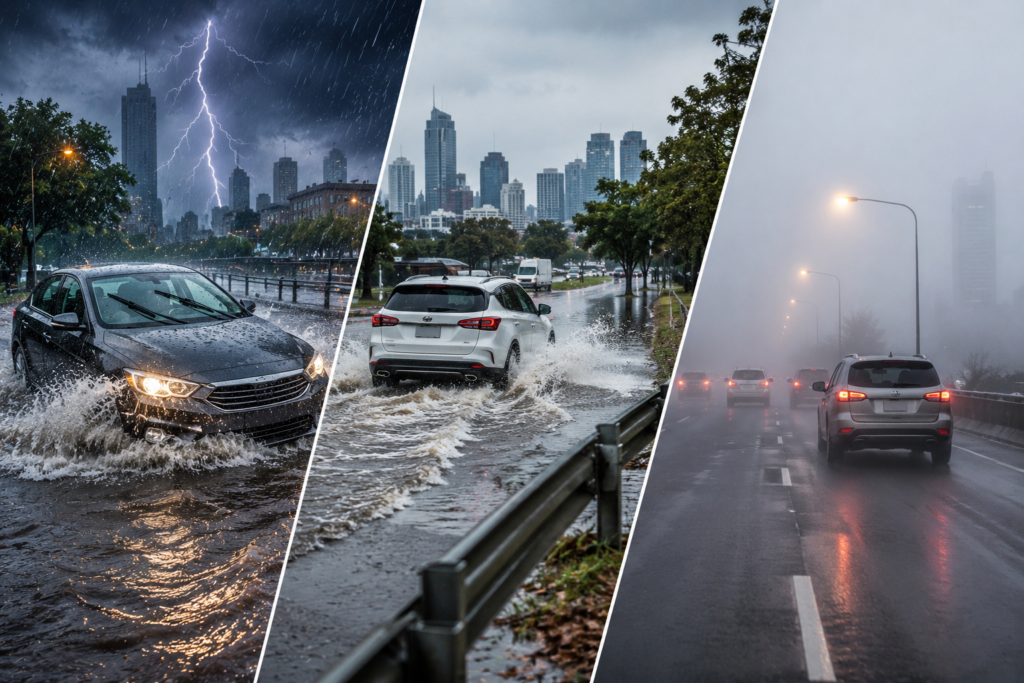
Melbourne’s reputation for having four seasons in one day is not just a joke locals tell visitors. It is a genuine driving hazard. A clear morning commute can turn into a flooded underpass by lunchtime, a sudden hailstorm by mid afternoon, and thick fog rolling through the outer suburbs by the time you drive home. Each of these conditions puts real, specific stress on a vehicle, and each one is a leading cause of seasonal breakdown and roadside assistance calls across Victoria.
This guide covers what storms, flash flooding, and fog actually do to a car, how to recognise when a situation has become dangerous rather than just inconvenient, and what to do if the weather catches you out on a Melbourne road.
Why Melbourne’s Weather Is Genuinely Different
Melbourne sits at the point where cold fronts moving up from the Southern Ocean regularly collide with warmer air pushing down from inland Australia, which is a large part of why the city’s weather can shift so quickly within a single day. The Bureau of Meteorology issues severe weather warnings for Victoria covering damaging winds, heavy rainfall, and flash flooding on a regular basis throughout the year, and these warnings are not just for rural areas. Melbourne’s own drainage systems, underpasses, and low lying roads are frequently affected when heavy rain arrives quickly. Checking current warnings before a long drive, especially during winter, is a simple habit that can help you avoid the worst of it.
Understanding this pattern matters for drivers because the risk is not just about rain falling. It is about how fast conditions change, and how little warning some hazards, particularly flash flooding, actually give before they become dangerous.
Storms: What Actually Puts Your Car at Risk
Hail damage. Severe thunderstorms in Victoria can produce hail large enough to dent panels, crack windscreens, and damage sensors mounted behind the glass on newer vehicles. If a storm warning is active and hail is forecast, moving your car under solid cover, even a carport or a multi storey car park, is worth the detour.
Damaging wind gusts. Wind gusts during severe storms can bring down tree branches and, in more serious events, whole trees onto parked or moving vehicles. Parking away from large trees during a storm warning is a simple step that avoids a genuinely common cause of vehicle damage in Melbourne’s leafier suburbs.
Sudden low visibility. Heavy rain during a storm cell can drop visibility to a few car lengths within seconds, which is one of the more dangerous but underappreciated storm risks, since drivers often do not slow down enough for how little they can actually see ahead.
Power outages affecting traffic signals. Storm damage regularly knocks out traffic lights at major Melbourne intersections. When this happens, every direction is legally required to treat the intersection as a stop sign, but in practice this causes confusion and a spike in minor collisions during and immediately after severe weather events.
Flash Flooding: The Most Underestimated Risk
Flash flooding is the storm related risk most likely to actually total a vehicle, and it is also the one drivers most consistently underestimate. Victoria’s State Emergency Service, which leads the state’s flood response, is explicit about why: floodwater on a road is often far more dangerous than it looks, because you cannot see what has happened to the road surface underneath it, and because moving water has enough force to carry a vehicle even when the water looks shallow.
A few practical points worth knowing:
Depth is deceptive from inside a car. Water that looks like a shallow puddle from the driver’s seat can be deep enough to reach the engine’s air intake, and once water is drawn into the engine, it can cause immediate and often irreversible damage, a failure mechanic’s commonly call hydrolocking.
Moving water is far more dangerous than still water. A relatively small amount of fast moving water can float or sweep a car sideways, since vehicles are not as heavy relative to their surface area as most drivers assume.
Road damage is invisible underwater. Flooding regularly washes out road edges, opens sinkholes, or lifts drain covers, none of which are visible once the road is underwater, which is part of why authorities consistently advise against attempting to judge depth by eye.
If your car stalls in floodwater, get out and get to higher ground rather than trying to restart it. Restarting a flooded engine can cause far more expensive damage than simply having the vehicle towed once the water recedes, and staying with a stalled vehicle in rising water is a genuine safety risk, not just an inconvenience.
Fog: The Quiet Seasonal Hazard
Fog does not generate the same urgency as a storm warning, but it is responsible for a steady stream of low speed collisions and breakdowns across Melbourne’s outer and semi rural suburbs, particularly in autumn and winter mornings when temperature drops overnight create ideal fog conditions.
Reduced visibility changes stopping distance risk, not just what you can see. Drivers often slow down for fog but not enough, since the real danger is misjudging the distance and speed of vehicles ahead that are only partially visible.
Fog lights are not the same as high beams. High beams reflect off fog and can worsen visibility rather than improve it. Low beam headlights, and dedicated fog lights if your vehicle has them, are the safer choice in genuinely thick fog.
Battery and electrical stress increases in cold, damp mornings. Cold starts combined with damp conditions are one of the more common causes of flat battery breakdown calls during Melbourne’s foggy winter mornings, particularly for older batteries already close to the end of their service life.
What to Do If the Weather Catches You Out
If you are caught in a storm while driving, slow down significantly, increase following distance, and if hail or extremely heavy rain makes visibility unsafe, pull over somewhere safe rather than continuing to drive through it. Avoid parking under trees if you do pull over.
If you encounter floodwater on the road, the safest choice is almost always to turn around and find another route. If you are already committed and the vehicle stalls, do not attempt to restart it. Get yourself and any passengers to higher ground first, then arrange for the vehicle to be recovered once it is safe to do so.
If your car will not start after driving through water, or after a storm has passed, do not keep attempting to start the engine, since repeated attempts can turn a recoverable situation into an expensive one. This is exactly the kind of situation breakdown support and roadside assistance exist for, since a flooded or storm affected vehicle usually needs to be assessed and moved by flatbed rather than jump started on the spot.
If fog reduces visibility to the point where driving no longer feels safe, finding a safe place to stop and waiting for conditions to improve is a reasonable choice, particularly on unfamiliar roads or in areas without street lighting.
If a collision happens during severe weather, towing from an actual accident scene in Victoria is handled through a separate regulated system rather than general roadside towing. Our guide on accident towing law in Victoria explains how that process works and what to expect if you are involved in a weather related collision.
A Seasonal Checklist for Melbourne Drivers
- Check tyre tread depth before winter, since worn tyres dramatically increase aquaplaning risk in heavy rain
- Test your battery before the colder months, since cold starts are one of the most common causes of seasonal breakdown calls
- Keep wiper blades in good condition and replace them at the first sign of streaking or skipping
- Avoid parking under large trees when a severe weather or storm warning is active for your area
- Know your nearest safe pull off points on routes you drive regularly, particularly any that pass through low lying or flood prone sections of road
- Save a roadside assistance number in your phone before you need it, not after

